
Dinosaur-killing impact crater might have been teeming with life
Hot, nutrient water might have lasted for over 5 million years after the impact.
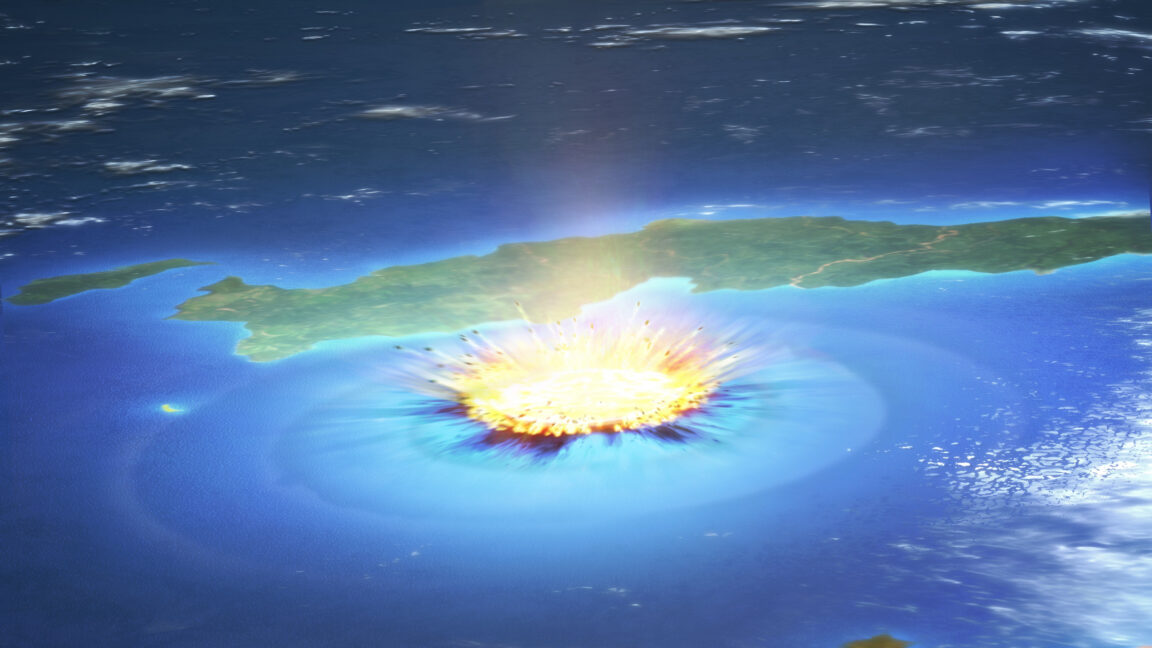
Hot, nutrient water might have lasted for over 5 million years after the impact.
The short version
- About 66 million years ago, the Chicxulub asteroid smashed into Earth, kicking up tsunamis and dropping hot debris that annihilated non-avian dinosaurs and many other species.
- But not everything it left in its wake was destructive.
- This space rock hit what is now the partially submerged Yucatan Peninsula, and at the bottom of the ocean, the impact generated enough heat to create a hydrothermal system that persisted for 8 million years and may have been a hotbed of life.
What happened
When researchers drilled for samples in the impact zone in 2016, they studied the types of rock that had formed as a result of the asteroid strike. This gave more insight into what happened in the immediate and long-term aftermath of this cataclysmic event.
Why it matters
The collision was intense enough to cause deformation far beneath the surface.
Summary by Nerd News Network. Read the full article at Ars Technica via the links above and below.