
Prehistoric builders transported Devil's Arrows 11 miles
Isotopic analysis revealed the most likely source to be Brimham Rocks, not the nearby Plumpton Rocks.
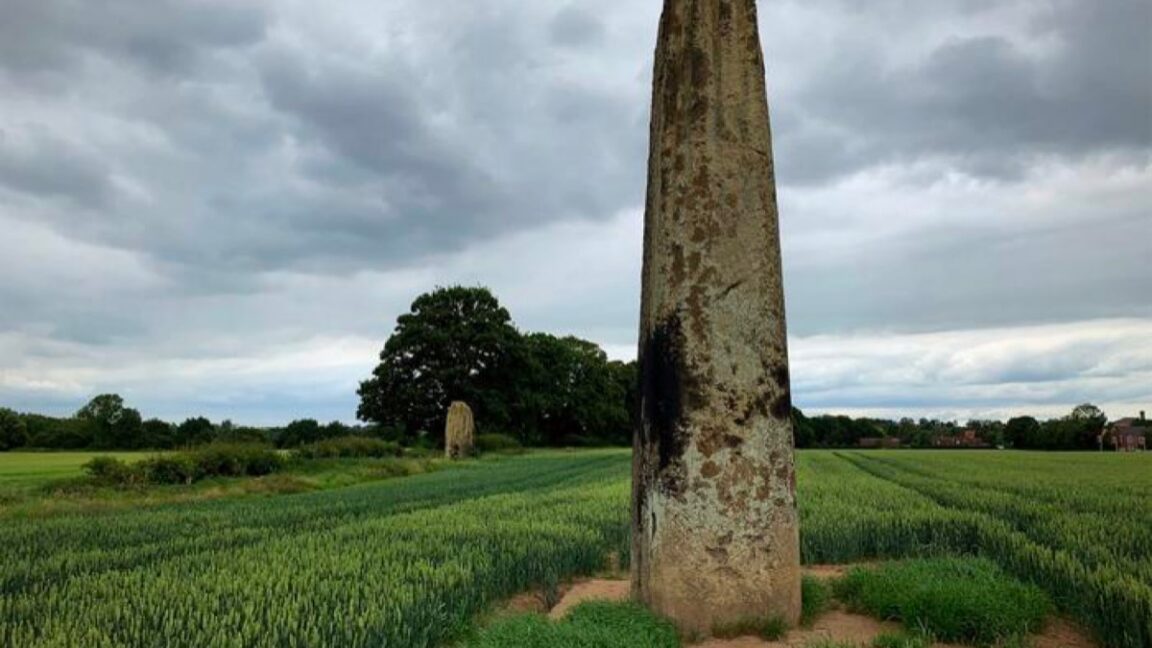
Isotopic analysis revealed the most likely source to be Brimham Rocks, not the nearby Plumpton Rocks.
The short version
- “Sites in southern England and Scotland receive considerable attention but monuments like the Devil’s Arrows have remained comparatively understudied despite their significance,” said co-author Jim Leary of the University of York.
- There is also evidence, in the form of possible stone sockets, that the line of stones had once continued north and may have served as way markers along the Great North Route.
- The Devil’s Arrows are made of a coarse-grained sandstone.
What happened
Plumpton Rocks, which is closer to the Devil’s Arrows, had previously been identified as the probable source of the stones. Based on their analysis, Clarke and his team concluded that the most likely source is actually Brimham Rocks, meaning the stones were transported by prehistoric builders significantly farther than originally thought.
Why it matters
Regional ice-flow reconstructions ruled out a possible glacial transport mechanism for the stones.
Summary by Nerd News Network. Read the full article at Ars Technica via the links above and below.