
SpaceX's Starship goes orbital, deploying first next-gen Starlinks
Starship had already flown 99 percent of the way to low-Earth orbit.
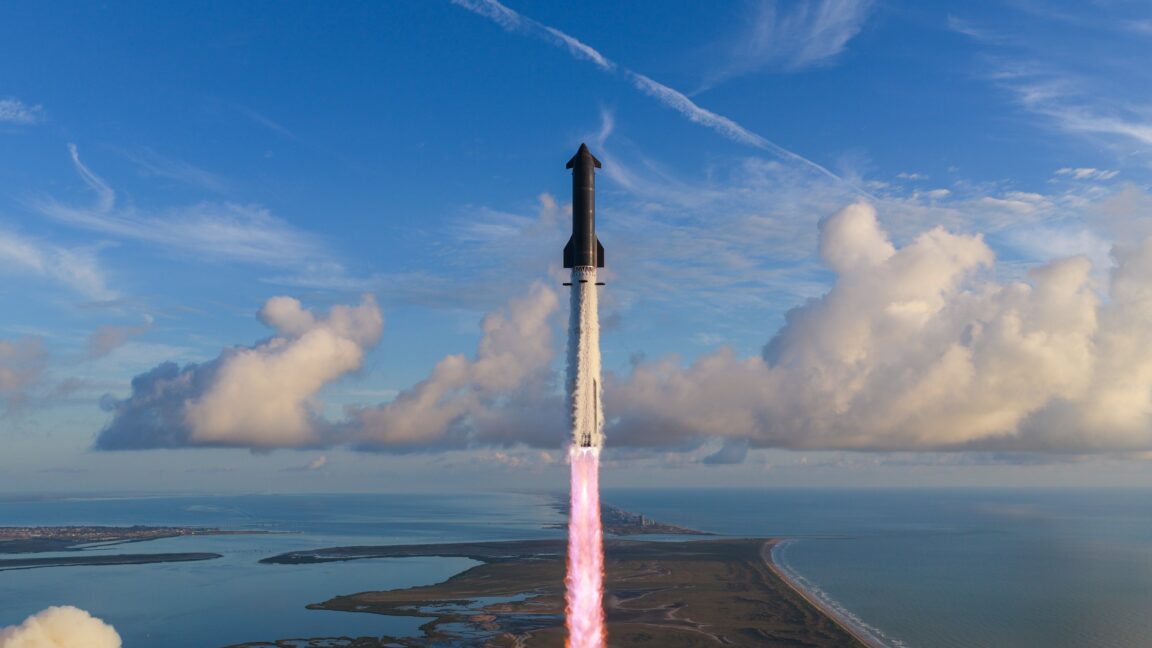
Starship had already flown 99 percent of the way to low-Earth orbit.
The short version
- SpaceX’s Starship rocket thundered into the sky over South Texas early Monday.
- It was the 14th test flight of the world’s most powerful launch vehicle.
- This time, however, the rocket’s massive upper stage squeezed out some extra oomph from its Raptor engines and accelerated to orbital velocity.
What happened
After several successful suborbital flights in a row, SpaceX officials decided this launch should go all the way to low-Earth orbit. What’s more, SpaceX packed 26 of the company’s newest generation of Starlink broadband satellites into the rocket’s cargo bay.
Why it matters
One by one, the flat-packed satellites —too large to fit inside SpaceX’s workhorse Falcon 9 rocket —were released from Starship’s payload deployer using a system of pulleys and cables to eject the satellites overboard like a Pez dispenser spits out candy.
Summary by Nerd News Network. Read the full article at Ars Technica via the links above and below.