
Stratospheric airship flew from US to Japan to test sky cell tower concept
Tests showed Sceye’s high-flying platform can deliver connectivity in disasters.
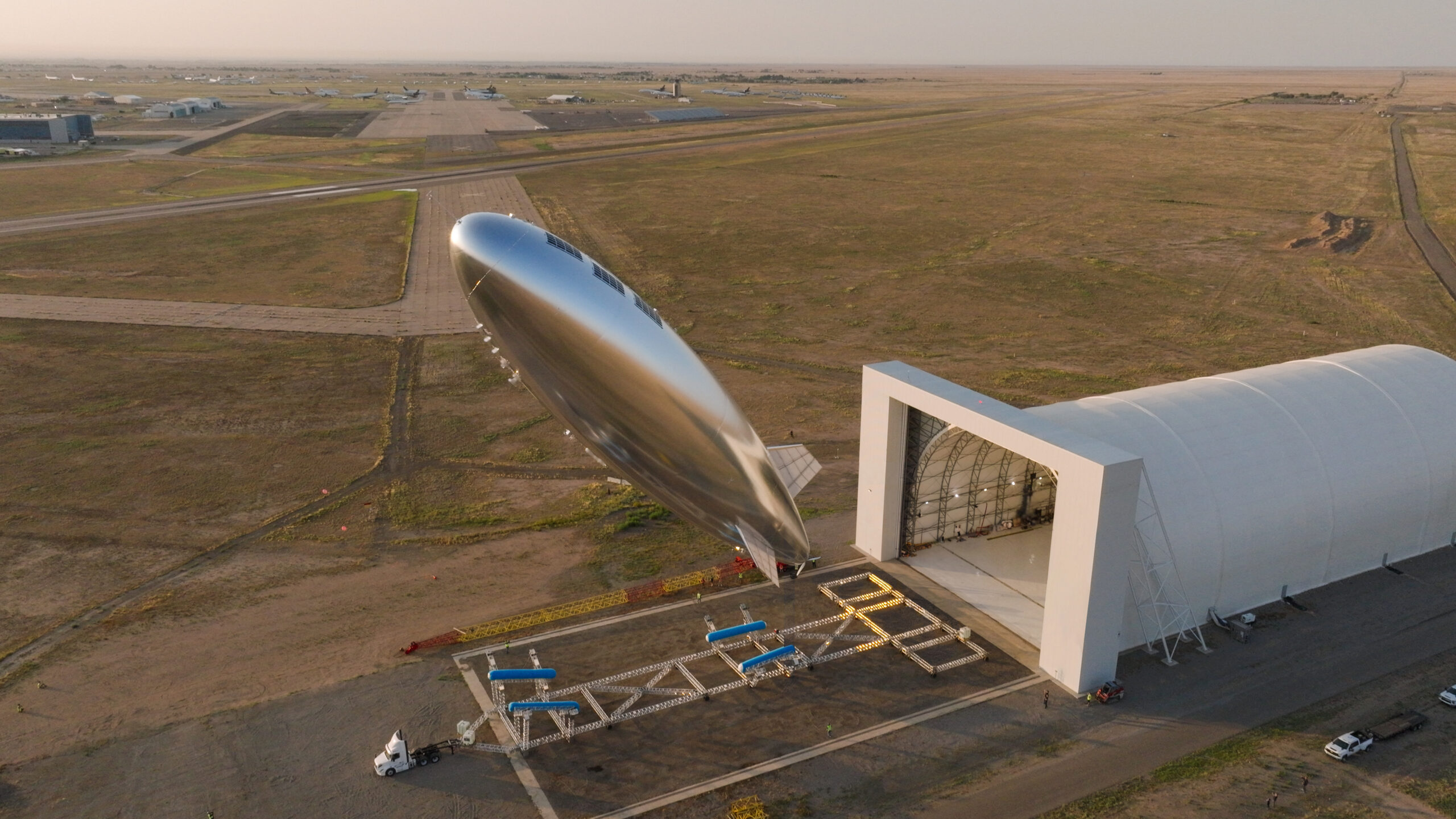
Tests showed Sceye’s high-flying platform can deliver connectivity in disasters.
The short version
- Nearly 100 years after the dirigible Graf Zeppelin made the first nonstop airship journey across the Pacific Ocean, another airship has successfully completed a round-trip flight from New Mexico to Japan and back.
- But the significance of this modern feat was less about the journey’s length and more about its purpose: demonstrating how a lighter-than-air platform can act as a cell phone tower in the sky.
- In Sceye’s case, the company began testing a series of smaller prototypes in 2016 before eventually reaching the stratosphere with a 215-foot (65-meter) length version in 2021.
What happened
The latest version extends to 270 feet (83 meters). The lighter-than-air platform has also benefited from advances in material sciences that “were either not discovered or not understood back in the late 1990s,” Frandsen said.
Why it matters
That would be between 25 and 50 times more payload capacity than competing stratospheric platforms such as high-flying drones, according to Helena , a US nonprofit organization with a for-profit investment arm that has invested in Sceye.
Summary by Nerd News Network. Read the full article at Ars Technica via the links above and below.