
The Roman telescope has enough gas for 22 years, double NASA's expectations
The Nancy Grace Roman Space Telescope is the first NASA observatory designed for in-space refueling.
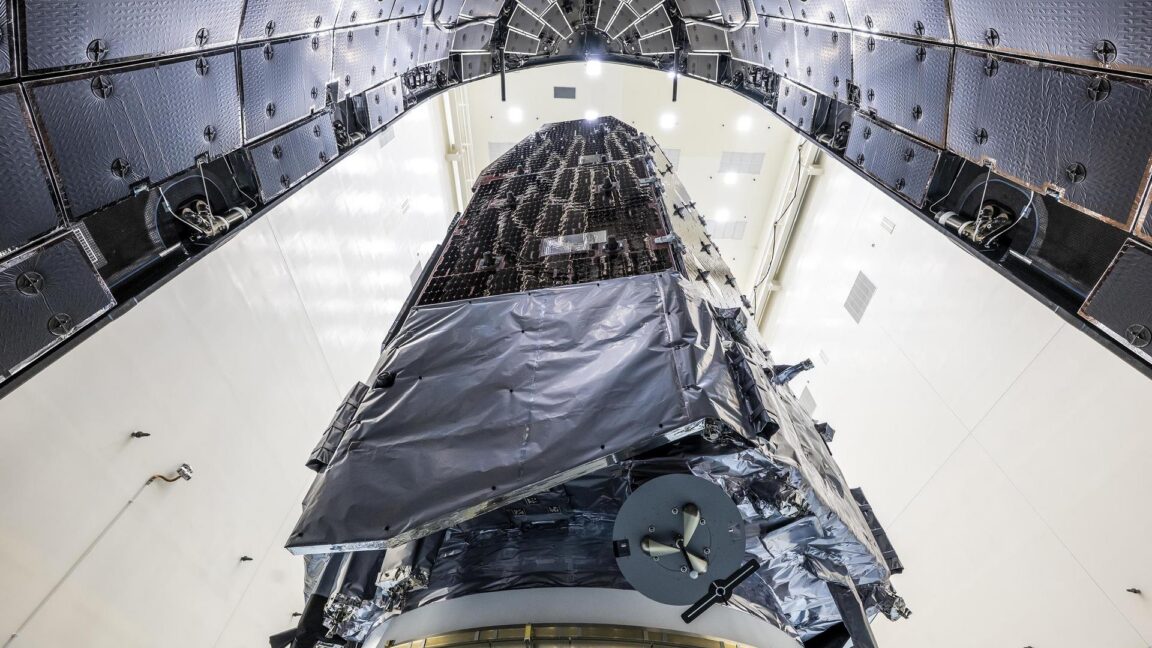
The Nancy Grace Roman Space Telescope is the first NASA observatory designed for in-space refueling.
The short version
- The $4.3 billion observatory’s designers originally planned to load enough propellant into Roman’s four fuel tanks for a minimum lifetime of five years, plus a potential five-year mission extension.
- NASA officials knew an on-target launch and perfect execution of the observatory’s first post-launch course correction maneuver would leave Roman with a hearty fuel reserve.
- The James Webb Space Telescope received a similar lifetime boost after a picture-perfect launch on a European Ariane 5 rocket in 2021.
What happened
The Roman telescope launched August 30 from NASA’s Kennedy Space Center in Florida aboard a SpaceX Falcon Heavy rocket, kicking off a mission to widen our view of the Universe. Roman’s telescope and scientific instruments will provide astronomers with images of the sky at the same resolution as NASA’s Hubble Space Telescope, but with 100 times the field of view.
Why it matters
It would take Hubble a century to observe what Roman will see in a month.
Summary by Nerd News Network. Read the full article at Ars Technica via the links above and below.