
Theban tomb reveals how Egyptian burial trends evolved in time
Practices shifted from individuals buried in coffins to reusing sites for later mummy interments.
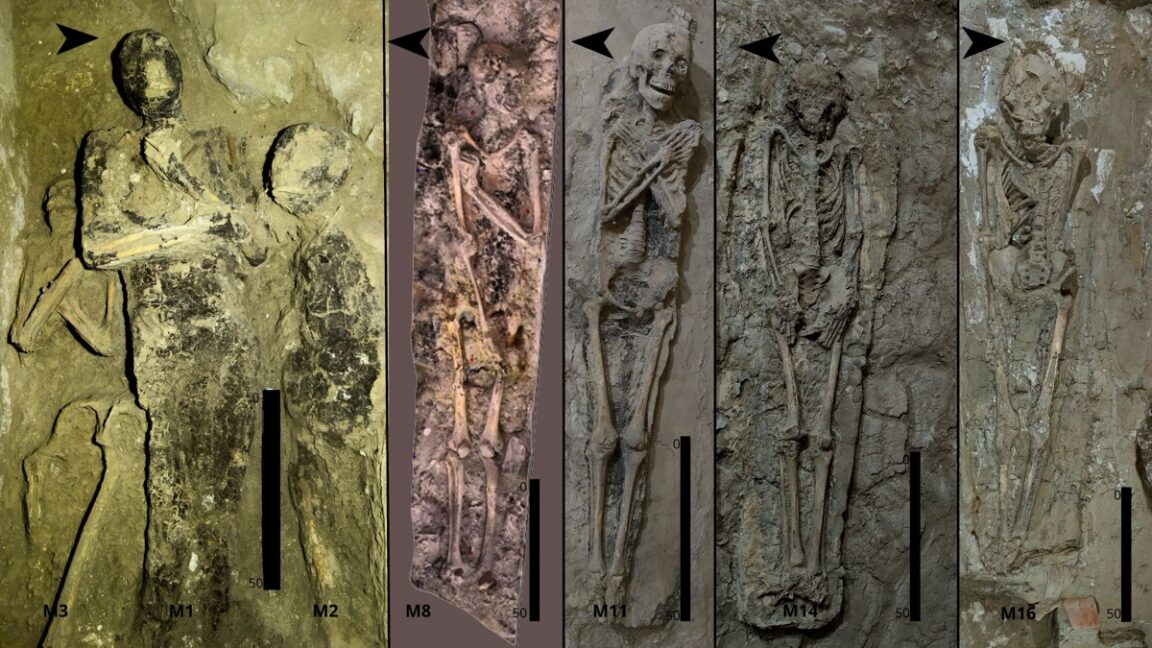
Practices shifted from individuals buried in coffins to reusing sites for later mummy interments.
The short version
- Egypt’s Theban necropolis holds over 400 tombs, a rich resource for archaeologists eager to learn more about that region’s ancient history.
- They focused on a site known as Side Chamber 3, one of the main secondary areas of the tomb that was largely undisrupted.
- The earliest phases also featured artifacts that clearly had been buried with the individuals: amphorae, incense cups, amulets, and beads, for instance.
What happened
Such artifacts were increasingly more dispersed in later burial stages. There was also evidence in some chambers of substantial reworking in the form of accumulated silts, sands, gravels, limestone blocks, plaster, ceramics, and other displaced materials—some due to human intervention, some possibly due to flooding.
Why it matters
And one chamber—the one with the fragmented remains of four people—may have experienced a fire, since the remains had clearly been damaged by excessive heat (as high as 550° Celsius, or 1,022° F), particularly the crania and lower limbs.
Summary by Nerd News Network. Read the full article at Ars Technica via the links above and below.