
Webb Spots a Hot Jupiter Trailing Twin Gas Tails That Defy Easy Explanation
JWST watched WASP-121b bleed helium into space as two long tails during a near-complete orbit — the longest continuous detection of a planet losing its atmosphere, and a configuration current models can’t explain.
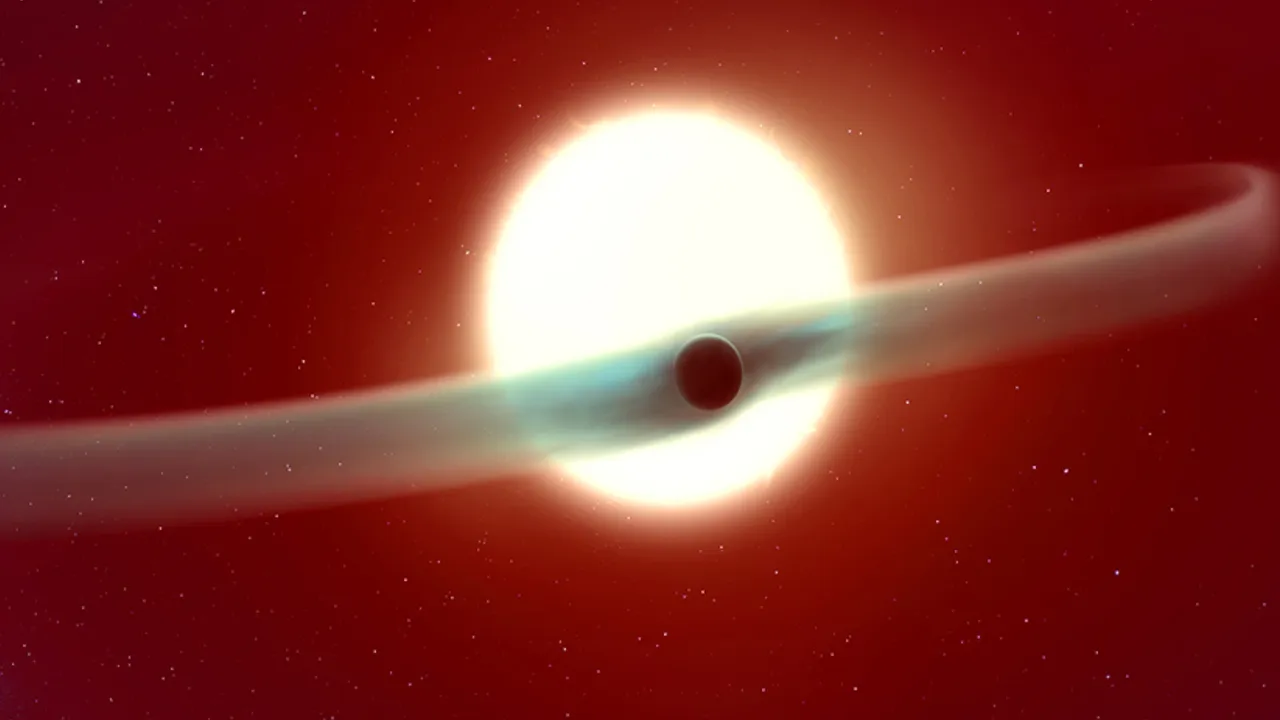
Webb has caught an ultra-hot Jupiter behaving strangely — shedding helium into space as two distinct tails that current theory struggles to account for.
The short version
- WASP-121b was observed losing helium in two separate tails during a near-complete orbit.
- The tails stretch roughly 100 times the planet’s width and three times the star–planet distance.
- At 37 consecutive hours with JWST’s NIRSpec, it is the longest continuous detection of atmospheric escape on record.
- The dual-tail structure contradicts existing models of how planets shed their atmospheres.
- The work was led by Romain Allart (University of Montreal) and published in Nature Communications.
Why it matters
Watching a planet erode in real time helps astronomers understand how worlds change under intense starlight — and the unexpected twin tails show how much of the underlying physics is still missing from the models.
Summary by Nerd News Network. Read the full article at Space.com via the links above and below.